


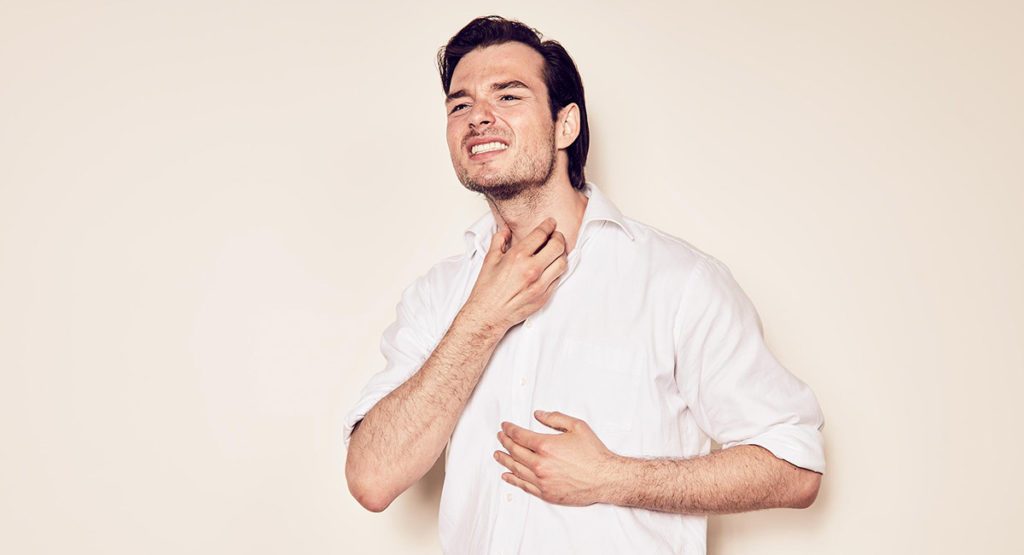


What is a voice disorder?
The term voice disorder (dysphonia) is used to refer to an abnormal change in the speaking voice that deviates from the norm and/or limits the person's vocal capabilities.
Etiologically, a voice disorder can arise from a disease of the vocal organs or from functional impairments, for example, after surgery. Likewise, voice conditions can occur as part of the natural aging process.
Hoarseness is the symptom that almost all voice disorders have in common. Hoarseness is defined as a more or less pronounced, pathologically altered voice quality caused by changes in the vibratory patterns of the vocal folds.
Since emergent hoarseness can be an early symptom of a serious disease, every case of hoarseness lasting longer than three weeks needs to be examined by an ENT specialist.
This particularly applies to persons with known risk factors like smoking and drinking alcohol.
How does a voice disorder develop?
Voice disorders can develop from multifactorial causes. Either way, a noticeable impairment in the normal vibratory behavior of the vocal folds has happened. The modified acoustic properties cause the voice to undergo a change in quality, making it more rough or breathy.
This change in voice quality is frequently accompanied by reduced speaking endurance. The patients will complain about increased effort in producing voice and that they feel fatigued when speaking or singing for lengthier periods of time.
Classification of Voice Disorders
Basically, the different voice disorders are classified into organic, functional and psychogenic dysphonias.
In organic voice disorders, the changes in voice quality have a morphological cause, e.g. vocal cord paralysis, vocal cord nodules.
By contrast, functional voice disorders do not develop from organic causes.
Here, the cause of the disorder lies in the improper or unphysiological use of the voice.
Psychogenic dysphonias arise from stress or conflict situations that put the patient under extreme mental, physical or emotional pressure.
Moreover, voice disorders can also occur as part of the natural aging process.
Note
At his Centers of Excellence for Voice Medicine in Berlin and Vienna, Dr. Wohlt treats all forms of voice disorders.
These educational presentations are intended to describe in greater detail those voice disorders that are treated or surgically managed on a regular basis and thereby reflect the routine work of Dr. Wohlt.
What Our Patients Say
Vocal Cord Nodules – Prof. Singer April 2022
Vocal Cord Nodules Surgery March 2024
Vocal Cord Cyst Surgery May 2024
Vocal Cord Paralysis Surgery October 2020
Vocal Cord Paralysis Surgery July 2025
Vocal Cord Cyst Surgery – Prof. Actor September 2025
Vocal Cord Cyst Surgery July 2026
Anti-Aging Voice Surgery October 2010
Vocal Cord Paralysis Surgery March 2006
Psychogenic Dysphonia – Aphonia April 2017
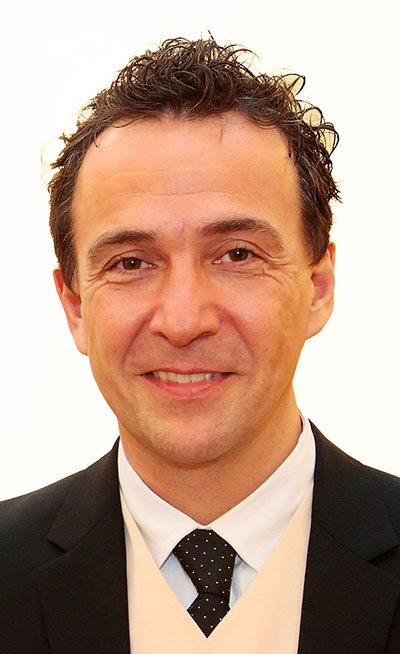
Author and medically reviewed by: Dr. med. Gerrit Wohlt – Specialist in Otorhinolaryngology (ENT) and Specialist in Phoniatrics and Phonosurgery – is an internationally renowned voice specialist and voice surgeon, specializing in the treatment and surgery of professional voice users and singers.
He is known for a gentle surgical technique without the use of lasers: microsurgical reconstruction of the vocal folds, particularly for vocal nodules, vocal fold cysts, Reinke’s edema, vocal fold paralysis and vocal fold polyps.
As a singing teacher and trained singer, he has a particularly sensitive approach to the diagnosis and rehabilitation of the singing voice.
Last reviewed: 24.09.2026
References:
1. Sataloff, RT. Professional Voice: The Science and Art of Clinical Care. 4th ed.: Plural Publishing (2017)
2. Rubin, Sataloff, Korovin: Diagnosis and Treatment of Voice Disorders. 3rd ed.: Plural Publishing (2006)
3. Wendler, Seidner, Eysholdt: Lehrbuch der Phoniatrie und Pädaudiologie, 5th ed.: Georg Thieme Verlag (2015)
4. Tucker, HM.: The Larynx, 2nd ed.: Thieme Medical Publishers (1992)